Week 5

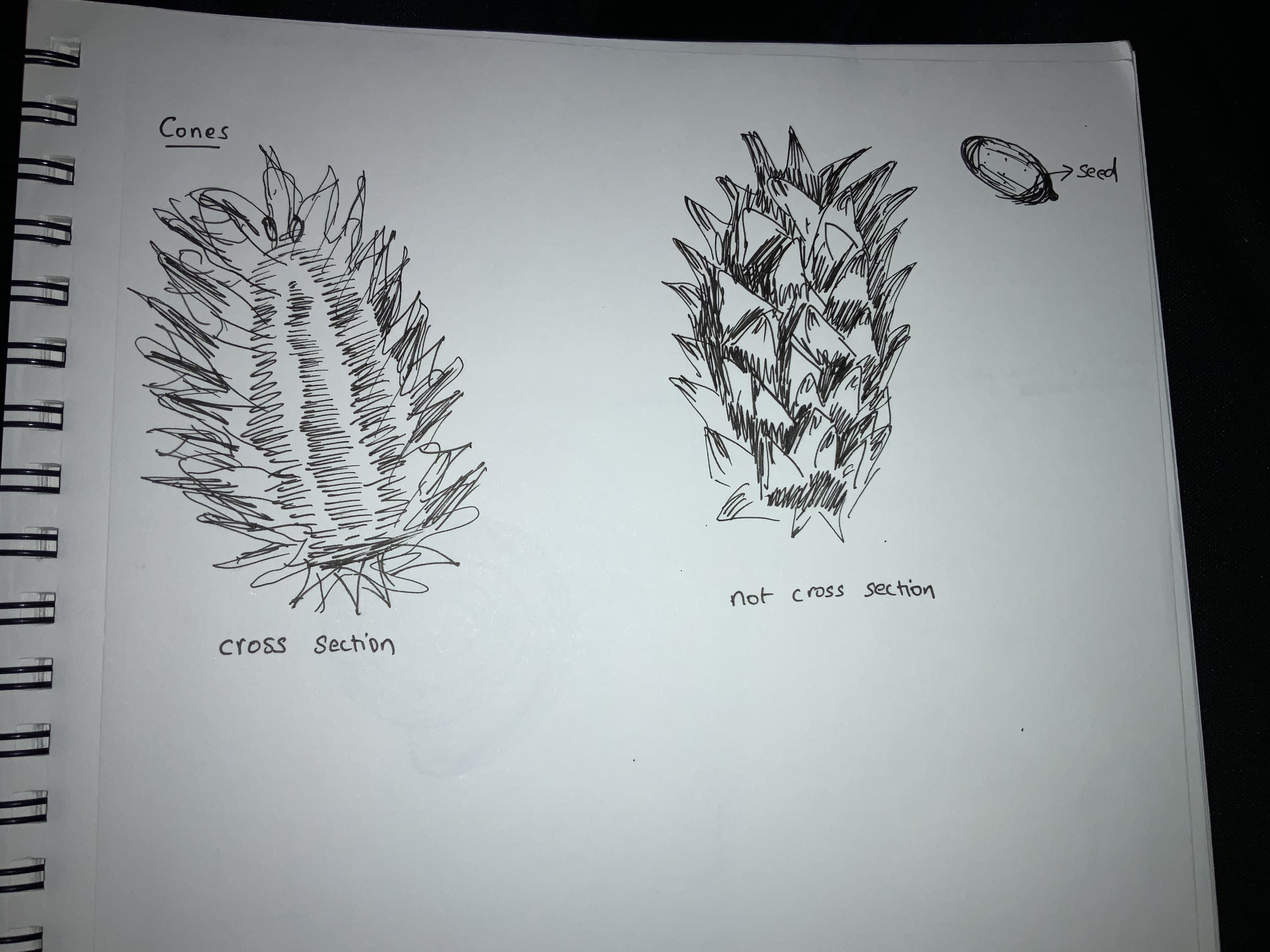
For this week I was given the task to draw a pine cone and its cross section. The pine I used to draw was most likely from Pinus elliottii, more commonly known as slash pine. Slash pine gets its name because “slashes” which are swampy ground that is overpopulated with trees and bushes. Other common names are yellow slash pine and southern Florida pine. This tree ranges from the Florida keys to to southern South Carolina. It’s natural habitat is maritime forests and wet flat woods. This tree is very fast growing and can reach heights up to 30 meters.

To draw the pine cone, I used a H4 pencil to draw the online then used that as guide line to draw the Pheripheral spikes. I then filled in the depths of the cone by coloring it with a black pen and left the spikes that came towards me uncolored to give it better depth perception

References:

https://en.m.wikipedia.org/wiki/Pinus_elliottii

Week 4

For this week, i chose a small shell I found out side my classroom. It was a shell that was most likely used my a snail. I wasn’t able to identify it as very small and damaged.

This shell was used under a microscope, and was magnified to 100X to observe all the details

To draw the shell I first with an outline using a H5 pencil then I followed it with a striation marks with a H3 pencil. Later I used a B3 pencil and used a #3 blender. I made sure not to completely blend the striation marks. To finish it, I used a H7 to replicate the minute sand particles that were on the crevices of the shell

WEEK 3

For week 3 our Audubon science illustration class were given an assignment to draw ball moss and another specimen of our choice. i chose a dolphin’s thoracic bone.

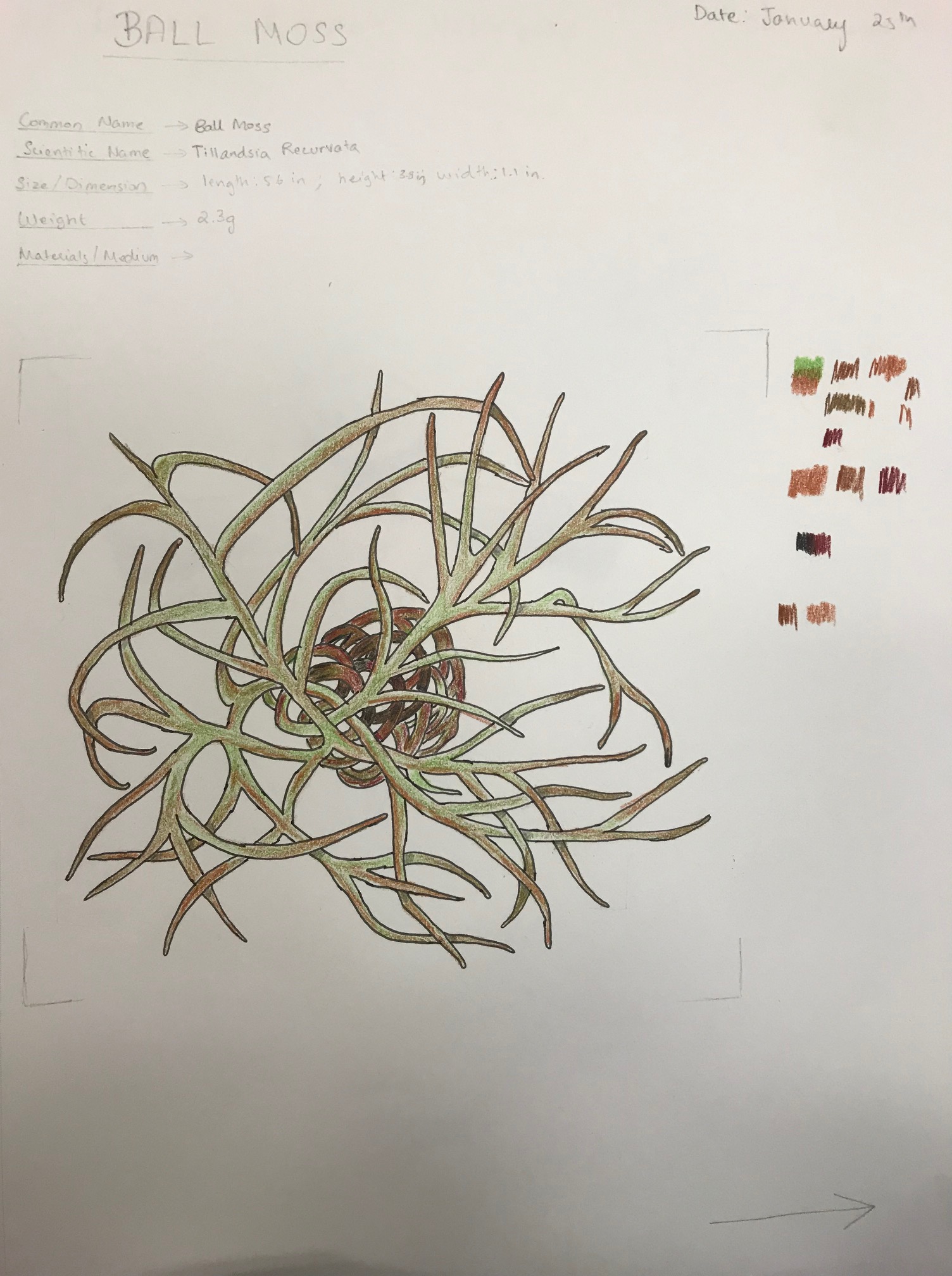
Ball moss (Tillandsia recurvata) commonly grows as an epiphyte. Ball moss especially favors the shady habitat of the lower and interior limbs of live oaks. The common assumption is that Ball Moss is a parasite but actually the Ball moss derives no nutrients from the tree, it anchors its pseudo-roots into the bark and absorbs water and nutrients from the atmosphere.

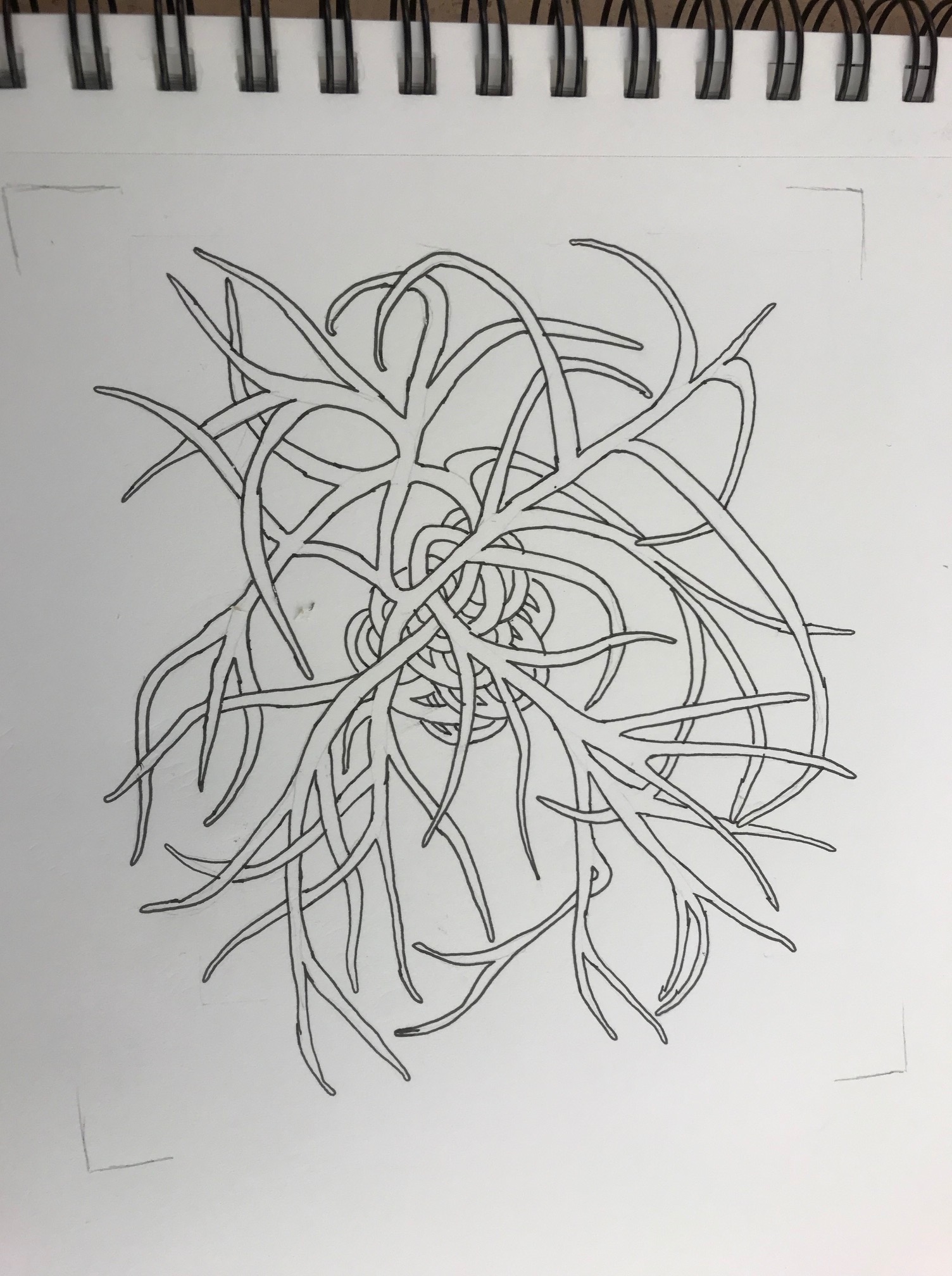
To draw the Ball Moss I started with an outline with a sharpie pen to highlight the complexity of the structure. I followed that with a light color green coloring of the entire structure and then added darker green, light brown, dark brown, maroon and black at certain areas to make it look realistic. The center was given darker colors because that is where most of the structure was dead.

For my second specimen: the Dolphin thoracic bone I started with an outline with a H4 pencil and used H2 and a blender (#4) for shading. under the circular head i used hatching to create a gradient and used the blender afterwards to make it look smooth. i also used stippling at certain areas to show the eroded parts of the bone. and i drew this specimen as if the light source was from the bottom right corner, so the shadow will cast on the left upper side.

References:

https://npsot.org/wp/story/2009/19/

Week 2

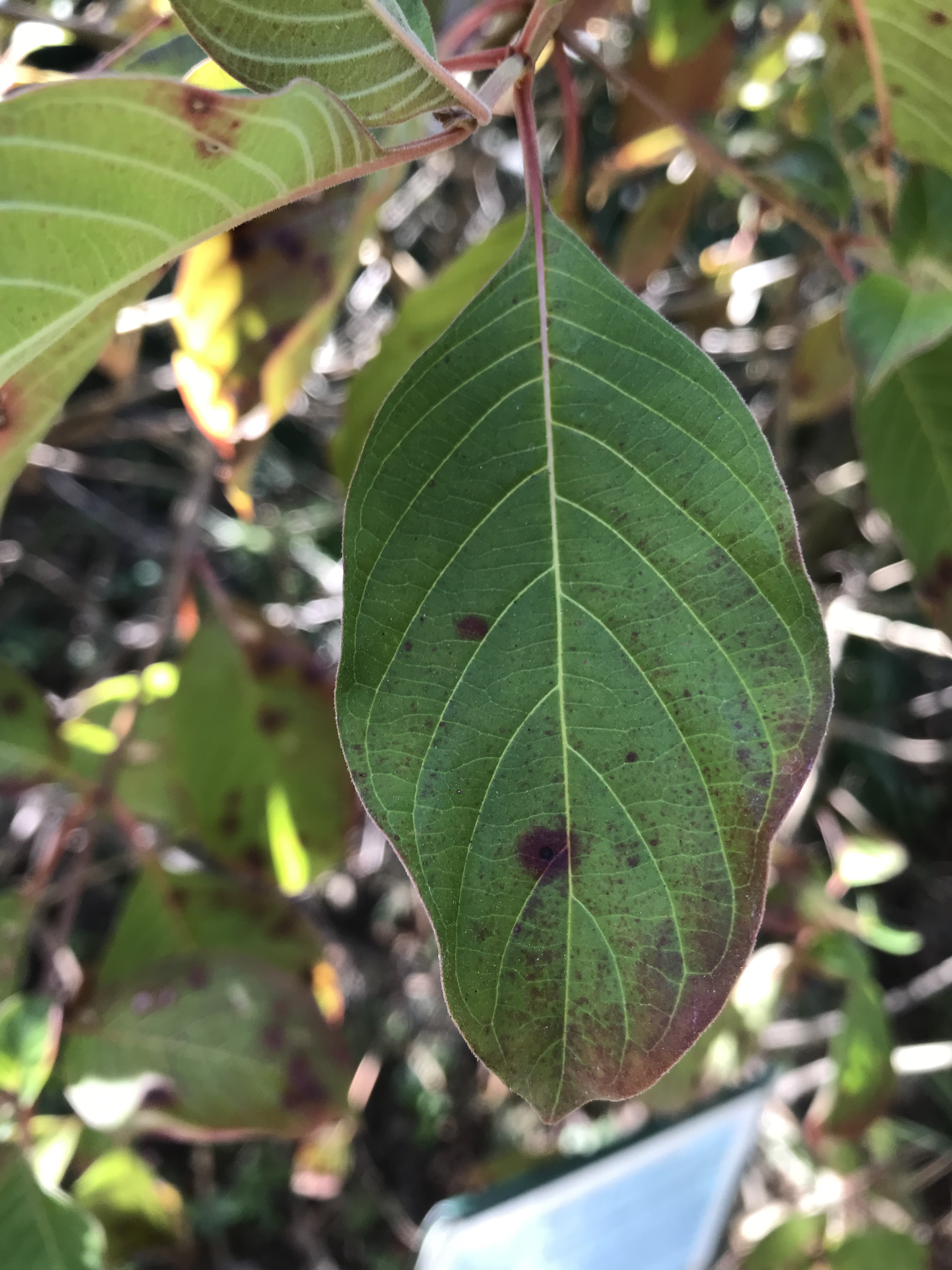
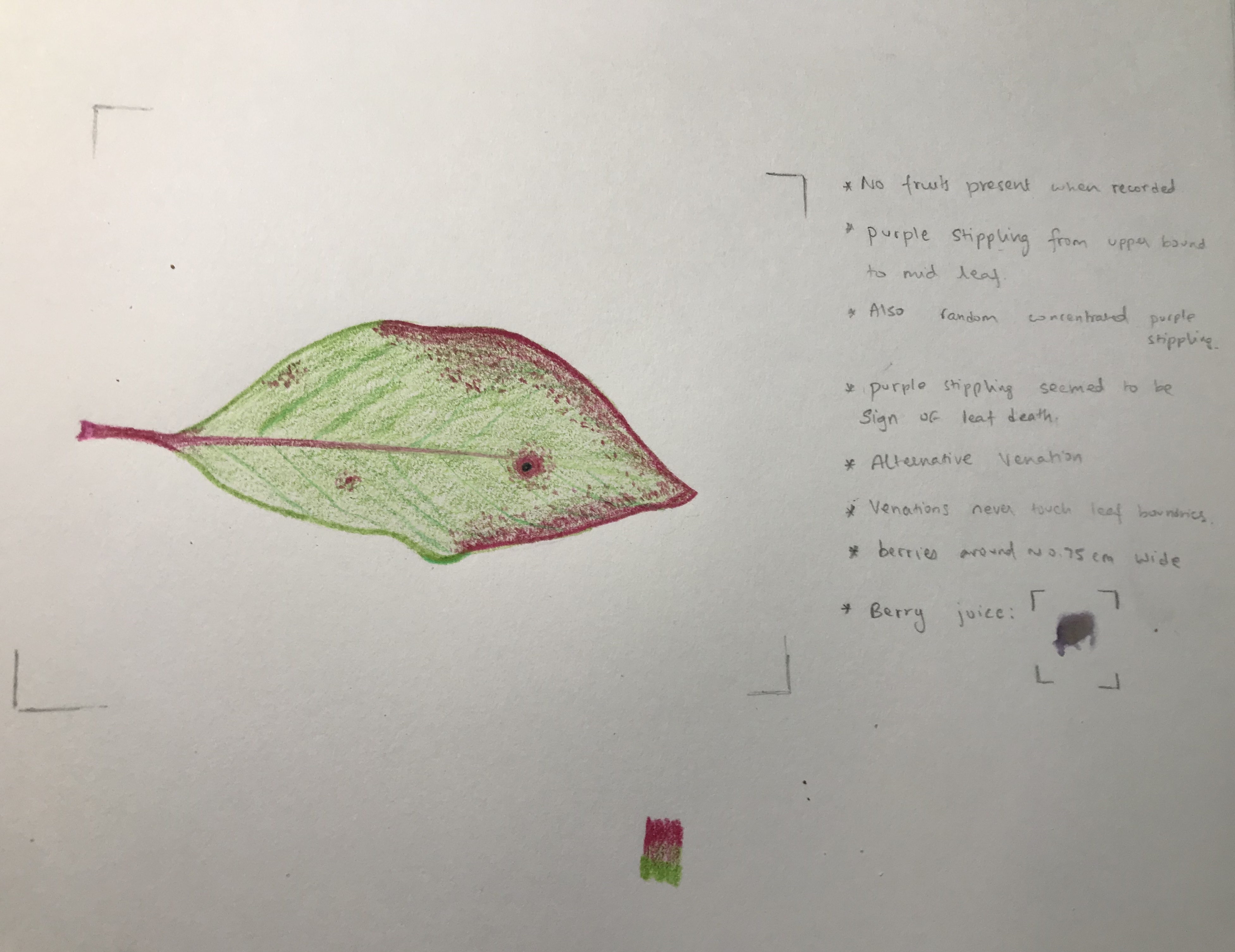
For week 2 our class went out school’s arboretum in Jupiter on January 18th at 2 pm. It was a sunny day with little humidity. I decided to draw the Firebush. Firebush is a perennial or semi-woody shrub that is known scientifically as Hamelia patens. Gardeners love firebush because it produces flowers from late spring until the first frost, and the bright red flowers attract hummingbirds and butterflies, including the zebra longwing and gulf fritillary butterflies. Song birds also like to feed on the berries.

The plant’s mature size will depend on where it is grown. In South Florida it may reach fifteen feet tall, though it can easily be kept to five or eight feet tall.

I noticed that the leaves that were on the peripheral of the plant had pink leaves and suspected that it was caused by sunlight. for shading the leaf, I used green for the base and reddish pink stipplings to show death on certain parts of the leaf. I also used a white color pencil to show venation on the leaf.

http://gardeningsolutions.ifas.ufl.edu/plants/ornamentals/firebush.html